
Part 4: When AI Becomes the Weapon: The Emerging Threat Landscape
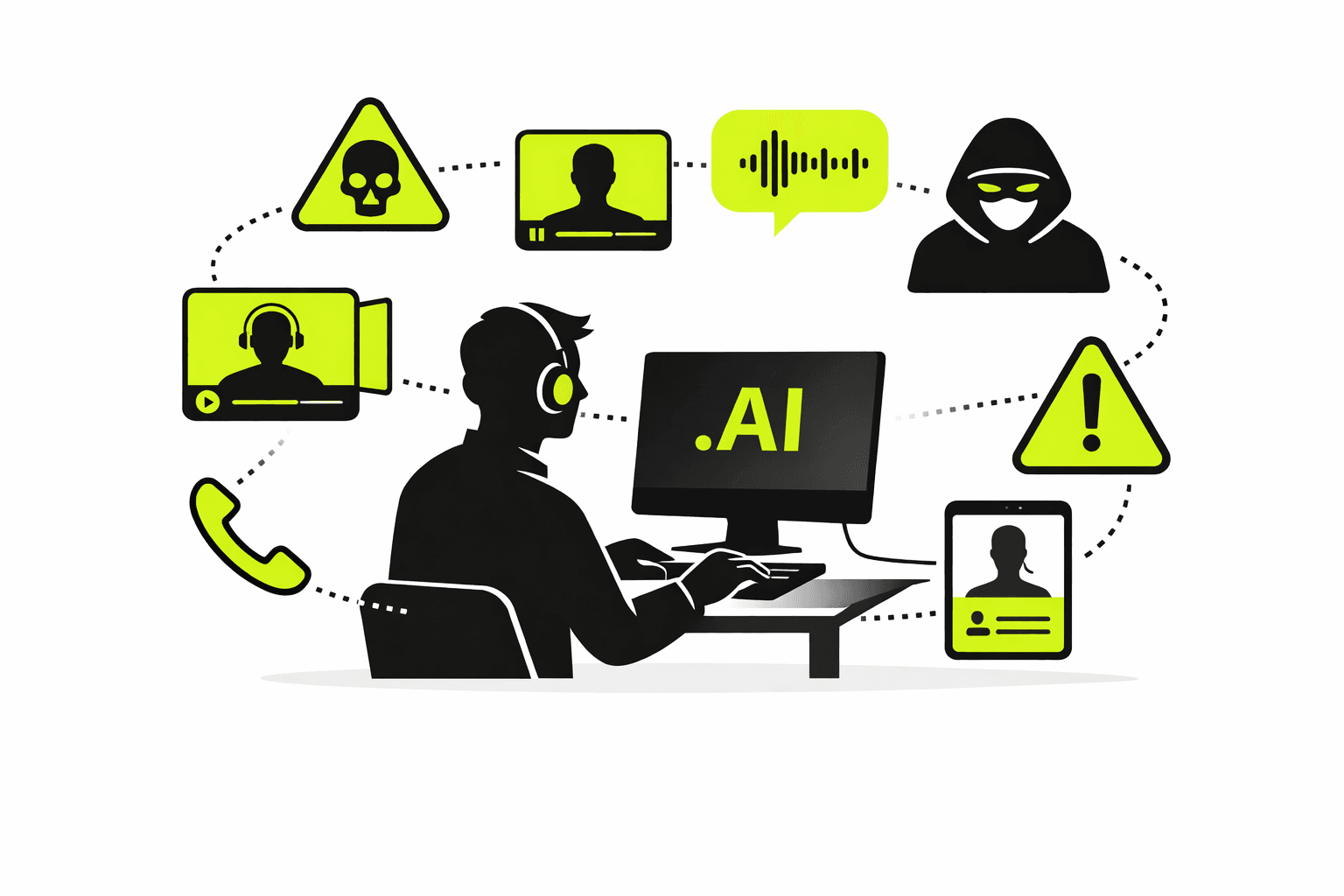
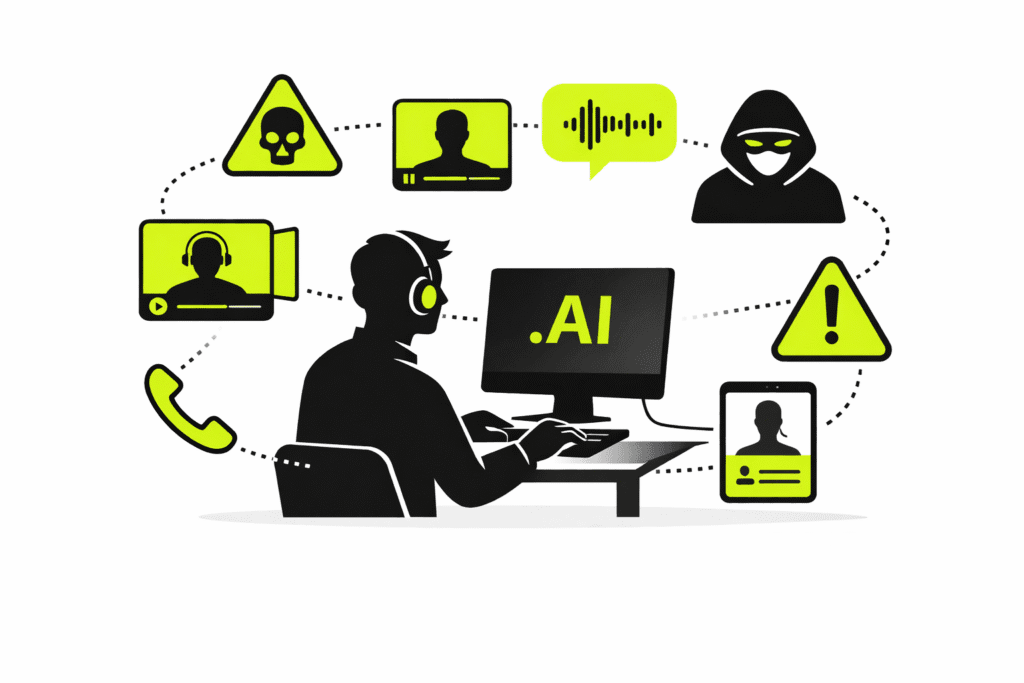
Recently, I encountered an incident that clearly demonstrated how the threat landscape is evolving with the integration of artificial intelligence into attack methodologies.
An employee reported receiving a call from IT support requesting credential verification for an “urgent update.” The voice on the call matched my tone, cadence, and speaking style with high accuracy. However, no such request had been initiated.
The employee followed the correct protocol, declined the request, and verified it through official channels. The call was confirmed to be malicious. The voice had been generated using AI-based voice cloning, likely trained on publicly available audio samples from prior conference sessions.
This incident highlights a fundamental shift. Traditional impersonation attacks relied heavily on human skill and were limited in scale and consistency. AI-powered attacks remove these constraints. With minimal input data, attackers can now generate highly convincing voice, text, and visual content at scale, significantly increasing the probability of success.
Evolution of AI-Driven Attack Capabilities
The operational barrier for executing advanced attacks has been significantly reduced. AI enables:
- High-quality phishing content with accurate grammar and contextual relevance
- Voice synthesis capable of replicating individuals with minimal audio input
- Image and document generation for identity and credential-based fraud
- Automated code generation supporting malware development and attack execution
These capabilities transform AI from a productivity tool into a force multiplier for adversaries. The same systems used for legitimate business operations are being repurposed for exploitation.
Misinformation and AI Hallucination Risks
Another critical issue observed is the reliability of AI-generated information. During internal assessments, AI systems produced confident but incorrect responses regarding organizational policies.
This phenomenon, commonly referred to as AI hallucination, introduces operational risk. Users may act on incorrect outputs assuming accuracy due to the authoritative tone of responses.
In one case, an employee relied on AI-generated guidance for data classification, resulting in improper data sharing. The issue was not malicious intent, but misplaced trust.
The key takeaway is that AI outputs must always be validated against authoritative sources. AI should be treated strictly as a support tool, not a decision-making authority.
Deepfake and Impersonation Risks
Voice cloning is only one aspect of the problem. Deepfake technologies are advancing rapidly, enabling realistic video-based impersonation.
A plausible attack scenario involves generating a video of senior leadership issuing urgent financial instructions. Given sufficient realism, such content can bypass human judgment if verification processes are not enforced.
The effectiveness of these attacks does not depend on technical flaws but on the absence of structured validation procedures.
Shift from Detection to Verification
Traditional security awareness focused on identifying suspicious indicators such as poor grammar or unusual formatting. AI-generated content removes these indicators.
Detection-based approaches are no longer sufficient. The focus must shift to process-driven verification, including:
- Independent validation of requests through official communication channels
- Callback procedures using trusted contact information
- Multi-level approval for sensitive actions
- Use of predefined verification questions or code-based confirmation
The objective is not to determine whether content is AI-generated, but to confirm whether the request itself is legitimate.
Data Exposure Through AI Usage
Another area of concern is the use of public AI platforms with sensitive data. During internal review, an instance was identified where confidential client information was shared with a public AI service for analysis.
Most public AI platforms retain user inputs for model improvement. This introduces a risk where sensitive data may indirectly influence future outputs.
To mitigate this, strict controls were implemented:
- Prohibition on sharing confidential or regulated data with public AI tools
- Use of only approved and controlled AI environments for sensitive operations
- Mandatory validation of AI-generated outputs
- Immediate reporting of potential data exposure incidents
The principle is straightforward: any data entered into public AI systems should be treated as potentially non-confidential.
Social Media as an Attack Surface
AI-powered impersonation is heavily dependent on publicly available data. Social media platforms provide sufficient information to construct detailed identity profiles.
Basic analysis of public profiles can reveal:
- Professional roles and organizational structure
- Communication style and behavioral patterns
- Voice and video samples
- Personal associations and routines
This information can be directly used to train AI models for targeted impersonation attacks.
The risk is not data breach, but voluntary data exposure.
Defense Strategy Against AI-Driven Threats
Based on observed incidents and operational response, effective defense strategies include:
Process Controls
- Mandatory verification for all sensitive requests
- Separation of duties and multi-person approvals
- Standardized communication validation procedures
Technical Controls
- Monitoring and restriction of AI service usage
- Implementation of email authentication protocols
- Deployment of phishing-resistant authentication mechanisms
User Awareness
- Training focused on verification, not detection
- Reinforcement of security as a standard operational process
- Clear guidance on acceptable AI usage
Individual Practices
- Limiting publicly shared personal and professional information
- Verifying all unusual or urgent requests independently
- Treating AI outputs as unverified until confirmed
Conclusion
AI has fundamentally altered the threat landscape. Attack sophistication is increasing, while the effort required to execute attacks is decreasing.
Detection-based security models are no longer sufficient. Organizations must adopt verification-driven security practices that remain effective regardless of attack complexity.
The effectiveness of defense is no longer determined by the ability to detect anomalies, but by the consistency of verification processes.
The core principle remains:
Trust must be established through validation, not assumption.
What’s Next
In the final part of this series, I will cover incident response—what happens when defenses fail, and how the first response determines the overall impact of a security breach.